

Wood pellet cat litter is a wonderful alternative to clay litter. Made of pine and cedar, it’s natural, dust-free, non-tracking, and completely non-toxic. Not to mention way better for the environment!
But is it for your cat? In this article, we go over all you need to know about wood and pine pellet litters and some of its nuances. Then I give you my top recommendations.
- Why I am Reviewing Wood Pellet Cat Litters
- A Little Background on Wood Pellet Cat Litter
- How to Use Wood and Pine Pellet Litter
- How Often Do You Need to Change Wood Pellet Cat Litter?
- The Pros and Cons of Wood Pellet Cat Litter
- Do Wood and Pine Pellet Litters Smell?
- Wood and Pine Pellet Litter Vs Clay Litter
- Why Wood and Pine Pellet Litters are Safer
- Best Overall Wood Pellet Cat Litter
- Runner Up Wood Pellet Cat Litter
- Best Budget Pine Pellet Cat Litter
- Most Popular Paper Pellet Cat Litter
- Best for Odor Control (Paper Pellet Cat Litter)
- Frequently Asked Questions About Wood Pellet Cat Litter
Why I am Reviewing Wood Pellet Cat Litters
I am on a quest for ultra-hygienic, super-safe healthy cat litter. Clay cat litter and the dust clouds that appear when you scoop is low key disturbing to me, from a safety and environmental point of view.
I’ve purchased everything from litter made from coconut to litter made from corn husks. I don’t mind getting creative to find natural, dust-free formulations that lack silica, sodium bentonite, fragrances, and other iffy ingredients.
After all, I don’t want my cat breathing that stuff in and flaring up respiratory issues. I’m also not crazy about taking it in, as a sufferer of allergies and eczema!
A Little Background on Wood Pellet Cat Litter

A big benefit here is that wood pellet litter is safe and natural. It’s made from highly compressed cedar wood and pine wood and is seriously absorbent.
Many brands that manufacture pellets are great about not using GMO ingredients, dyes, chemicals or weird fragrances. They know that their customers are looking for clean options.
In contrast to clay litter, wood pellet litter is large and its large size naturally does not track as much.
It’s a non-tracking, no litter cloud litter box experience for you. You’re also using a recycled, eco-friendly product. It can be great for cats (and humans) with allergies, asthma, and other respiratory conditions. It’s also super safe, going great with a kitten litter box while toilet training your new fluffy buddy.
How to Use Wood and Pine Pellet Litter
Wood pellet litter is every bit as easy as using the traditional clumping litter – with a few changes. You don’t have to buy a new litter box, either. And some brands even sell pellets that are flushable.
If you have a regular litter box:
- Fill the litter box with a few inches of pellet cat litter.
- After exposure to liquid, the pellets soak it up and then turn into dry sawdust instead of forming normal hard clumps.
- So after your kitty goes, scoop the entire area where they went and hold it over your trash receptacle. Don’t worry about picking up clean litter.
- Shake to dislodge the sawdust – leaving dry, clean litter on the scoop. Return it to the litter box. Refill with more pellets to replace what you threw out.
- For solid waste, cover it with pellets and dispose in your usual way – whether it’s the trash or down the toilet.
Some litter brands recommend leaving used sawdust at the bottom of the box because they’ll still absorb. This means you need to scoop even less. What a game changer!
If You Use a Sifting Litter Box
These are litter boxes that keep fresh pellets clean and separates used litter sawdust in a compartment under the box.
- Scoop solid waste and dispose of it in trash or toilet.
- Separate the top sifter from the bottom section and give it a good shake to separate used sawdust from clean pellets,
- Once a day or every few days access the compartment (or bottom tier of the box) and throw the used dust away.
- Refill with fresh pellets if necessary.
How Often Do You Need to Change Wood Pellet Cat Litter?

Pellet litter needs to be changed less frequently than traditional litter because after each use, you are potentially replacing soiled pellets with fresh ones.
The frequency needed at your home is going to depend on things like your cat’s litter box habits and the number of cats you have.
Scoop solids every day, sift and shake daily and you’ll maintain very hygienic situations. And every few weeks, just like with clay litter, toss the entire batch and fill it up with fresh pellets.
An obvious odor is also a sign that you’re overdue to change the litter.
The Pros and Cons of Wood Pellet Cat Litter
Pros
Wood pellet litters can be much safer and healthier for cats, humans and the environment.
I like that this is a biodegradable and sustainable option that is made from natural, recycled materials without all kinds of added scents, dyes or chemicals.
It also doesn’t track around your house because it won’t stick to your cat’s paws. It’s also a virtually dust-free option that’s great for allergies while also being very easy to maintain.
Another big pro for me is that pellet litters often cost a lot less than clay litters, like a fraction of them.
And often, this is for all-natural, non-GMO products that are biodegradable!
Cons
The main potential concern is that your cat might reject wood pellets in her litter box if this is something new. If your cat is picky, the feel of pellets may not be a great fit and they end up never using it.
You’ll also need to learn a new way to manage litter that’s different from the typical method of scooping clumps, as the pellets do not clump.
The silver lining: with liquids, some cat owners dont even scoop, they just let the pellet get moist, dry, and crumble.
Do Wood and Pine Pellet Litters Smell?

Natural pellet litter actually has a natural pine scent. While I personally like it, it will drive you crazy if you don’t like the scent of pine.
It’s pretty standard for brands to not add any scents to pine and wood pellet litters. Some of the fragrances that traditional litter brands add to their formulas are actually toxic for cats.
Wood and Pine Pellet Litter Vs Clay Litter
Summary of the main differences between pine pellet litter and clay:
- Wood pellet litter is mostly non-clumping
- The texture is large vs sand-like grains for clay litter
- It is completely dust free and non-tracking due to its size
Why Wood and Pine Pellet Litters are Safer
Clay litter causes potential respiratory problems and gastro-intestinal issues.
Dust from clay litter can exacerbate asthma and other allergies – in your cat and yourself.
When moisture is added, the sodium bentonite in clay litter is capable of swelling to up to 15 times its size. It’s almost inevitable that some litter will become embedded in a cat’s fur.
Unfortunately, that means that cats can ingest litter when licking their paws and coats. This can create buildup in the intestinal tract that can cause everything from painful constipation to complete obstruction.
The reality that most cat owners don’t know that clay cat litter poses hazards to both feline health and the environment. And while some cats go their entire lives without issues stemming from clay litter, the risks are always there.
Best Overall Wood Pellet Cat Litter

- Great scent control
- Amazing moisture control
- Lightweight and concentrate
- Non-toxic, free from chemicals
Combining natural pine and baking soda, Feline Pine Platinum Original Non-Clumping Cat Litter with Baking Soda is my freshest pick.
This pine pellet cat litter light, low-dust formula that does a tremendous job with odor control, and so many reviewers comment how there is no ammonia smell coming from the litter box.
The pine pellets also do very good job with absorbing moisture quickly. In fact, it’s so good, some cat owners do not scoop urine anymore. They simply let the pellets soak it in and breakdown to dust.
A 40-pound of Arm & Hammer Feline Pine Cat Litter is about the equivalent of a 114-pound bag of clay litter in terms of usage. That’s a lot of absorbency power!
With over 5000 satisfied purchasers, this pine pellet litter is worth a purchase if your or your cat have allergies or asthma.
What We Liked:
- Great scent control
- Amazing moisture control
- Lightweight and concentrate
- Non-toxic, free from chemicals
What We Didn’t Like:
- Few complaints of batch inconsistency
Runner Up Wood Pellet Cat Litter

- Dust-free formula made from de-dusted wood fiber
- Non-tracking
- Great moisture control
- Clumps
- Easy to scoop
My runner up pick is kind of unique in this pellet cat litter space. ökocat’s mini pellets actually clump!
So you get all the dust-free, non tracking benefits of non-toxic wood pellet litter with the convenience of clay’s clumping. ökocat’s mini pellets may also be easier on paws because they’re smaller, too.
These pellets do a great job of absorbing moisture and actually stop ammonia and odors from forming in the first place. You’re left with an easy-to-scoop end product that is fully compostable and flushable.
Like all pellet litters, this is great if you’re looking something that won’t stick to your cat’s fur.
ökocat Less Mess Natural Wood Clumping Cat Litter can be a dream for a cat with allergies because you’re getting a dust-free, clean wood fiber. So no more nasty litter dust on all your stuff and clouds while scooping!
What’s more, ökocat actually screens and “de-dusts” its litter before packaging it to give you the cleanest pour around without any dust clouds appearing out of the blue.
What We Liked:
- Dust-free formula made from de-dusted wood fiber
- Non-tracking
- Great moisture control
- Clumps
- Easy to scoop
What We Didn’t Like:
- Price
Best Budget Pine Pellet Cat Litter

- Great price.
- Good odor control.
- Easy to scoop.
Switching to healthy cat litter can be intimidating for some cat owners based on price. So I want to show you that safe pine pellet cat litter can be affordable with this good budget pick.
Kaytee Wood Pellets is actually an all-purpose pellet that can be used for a wide variety of smaller pets. For cats though, they work as expected. These pine pellets expand when wet to hold moisture in.
Once expanded, the pellets are scooped away very easily without any concerns about sticking. If you let it sit, they degrade into saw dust.
Overall Kaytee Wood Pellets for Pets provide a great low-cost pine pellet litter to some of the fancier organic choices without any diminished performance. They even have surprisingly good odor control.
This is not a flushable option like our other wood pellet cat litter brands.
What We Liked:
- Great price.
- Good odor control.
- Easy to scoop.
What We Didn’t Like:
- Cannot be flushed.
Most Popular Paper Pellet Cat Litter

- Very little dust or tracking
- No fine particles
- Eco-friendly formula and packaging
Technically this is a paper pellet cat litter, but paper is made from wood and qualifies in my book!
I just had to include PURINA Yesterday’s News because it’s such a great performer, from a mainstream company, as a fantastic price. It’s dust-free, non-tracking, and safe.
I love seeing a popular brand that is is leaving their natural cat litter truly natural.
PURINA Yesterday’s News Non Clumping Paper Cat Litter is free from fragrances or chemicals and is made from recycled paper with recycled packaging. So eco!
It does a great job at controlling moisture, just let the pellets do their work and sift through it daily to find the wet soiled litter. Remove solids as soon as you can because odor control is not the best with solid waste.
What We Liked:
- Very little dust or tracking
- No fine particles
- Eco-friendly formula and packaging
What We Didn’t Like:
- Price
- Color makes it hard to tell between clean and soiled litter
Best for Odor Control (Paper Pellet Cat Litter)
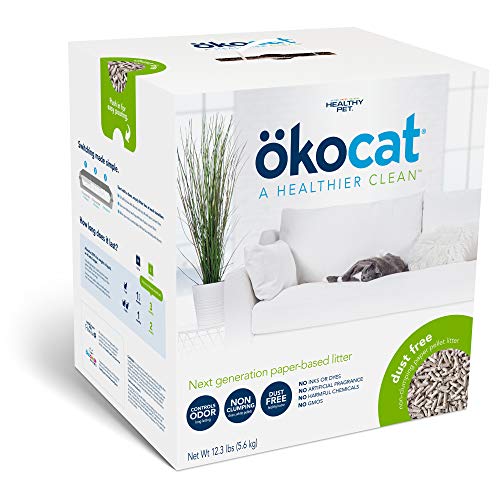
- Ultra-clean ingredients
- No dust
- Top-notch odor control
- Dries quickly
These natural paper-fiber litter pellets really knock it out of the park for long-lasting odor control. They’ve actually been designed specifically to suppress the ammonia odor that builds up commonly in litter boxes.
With this paper litter, you’re getting freedom from all airborne dust. For that reason, this is a top pick for cats with allergies or respiratory issues.
Everything in ökocat’s Paper Non-Clumping Cat Litter Pellets is sustainably sourced using planet-friendly, biodegradable ingredients. You don’t have to worry about any artificial fragrances, dyes or chemicals disturbing your cat.
I like this litter for a home with multiple cats because the pellets dry very quickly. That means you never have to worry about one cat tracking after jumping in the box right after another cat.
What We Liked:
- Ultra-clean ingredients
- No dust
- Top-notch odor control
- Dries quickly
What We Didn’t Like:
- Price
- Tracks a bit due to smaller litter grains
Frequently Asked Questions About Wood Pellet Cat Litter
Are wood pellets good for cat litter?
Yes, absolutely! This is an option to consider if your cat has any health issues, respiratory issues or allergies. There are really no downsides for your cat’s health or wellness when it comes to wood pellet litters.
This is a great option if you want to protect your cat from harmful clay cat litter that can cause dust particles to enter their lungs or digestive tracts.
What wood pellets are best for cat litter?
Pine is the default choice for pellet litters. Pine actually has a naturally fresh odor that neutralizes litter smells without any need for harmful chemicals or fragrances to cover up the smell.
In some cases, you may find that a paper pellet litter that is derived from wood is also a good choice for odor and moisture control.
Is pine pellet litter safe for cats?
Yes, pine pellets are entirely safe for cats. In fact, many vets recommend pine litter over traditional clay litters because this option is so much healthier for cats.
Brands that sell pine cat litter typically make natural, eco-friendly products that don’t contain any chemicals. However, you should still research all of the ingredients in any litter before you buy it to verify that you’re getting a natural cat litter.
The only potential downside to using pine pellets is that your cat simply may not like this option if she is used to another type of cat litter.
