
If your cat is dealing with chronic vomiting, diarrhea, or allergic reactions, a sensitive stomach cat food may be what they need. For my cat, that was Instinct Limited Ingredient Wet Cat Food.

- One novel protein, one vegetable recipe
- Real rabbit meat and organs, made in the USA
- Free of wheat, soy, eggs, grains, filler, allergens
- Flavors: Rabbit, Salmon
- Protein By Dry Matter Basis: 41.67%
After guiding my cat (above and dry heaving) through a plethora of digestive problems, I’ve learned so much about cat foods for sensitive stomachs, and can offer practical advice to other cat owners struggling with similar issues.
But what’s best for my cat might not be for yours. After all, cats are individual and suffer from different ailments. Thats why I listed the best cat foods for sensitive stomachs in various categories.
At the end is a complete buyers guide with essential information on cat food and sensitive stomachs.
These are the products we review in this article: (not all shown)
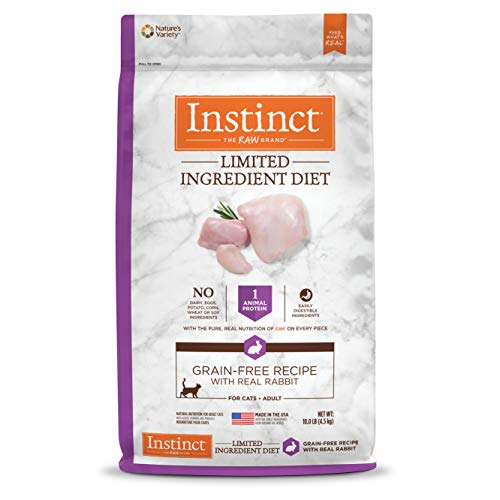
Instinct Limited Ingredient Dry Cat Food
- Rabbit, Salmon, Turkey Flavors
- Limited ingredient, novel protein
- 44.07% min Protein By Dry Matter Basis

- Beef, Lamb, Venison, Chicken, Mackerel Flavors
- Grain free, no filler
- 45.45% min Protein By Dry Matter Basis

Blue Buffalo Sensitive Stomach Dry Cat Food
- Chicken Flavor
- Prebiotic fiber
- 35.16% min Protein By Dry Matter Basis

Royal Canin Digest Sensitive Wet Cat Food
- Chicken Flavor
- Highly digestible proteins
- 51.72% min Protein By Dry Matter Basis

Hill's Science Diet Cat Food, Sensitive Stomach & Skin
- Chicken, Salmon Flavors
- Prebiotic fiber
- 32.22% min Protein By Dry Matter Basis

Hill's Prescription Diet z/d Skin/Food Sensitivities
- Chicken Flavor
- Hydrolyzed protein, limited ingredient
- 31.87% min Protein By Dry Matter Basis
- Prescription Required
- Best Wet Cat Food for Sensitive Stomach
- Best Dry Cat Food for Sensitive Stomach
- Best Premium Sensitive Stomach Cat Food
- Best Sensitive Stomach Cat Food for Vomiting
- Best Sensitive Stomach Cat Food for Diarrhea
- Best Sensitive Skin and Stomach Cat Food
- Also Great for Sensitive Skin
- Symptoms of Cats with Sensitive Stomachs
- Type of Reaction
- How to Choose a Sensitive Stomach Cat Food
- Foods to Avoid for Sensitive Stomachs
- Causes of a Sensitive Stomach in Cats
- Food Digestibility Scores
- What Do Vets Recommend for Cats with Sensitive Stomachs?
- Frequently Asked Questions on the Best Cat Food for Sensitive Stomachs
All cat foods included on this list meet the standard AAFCO nutrient profile guidelines for cats. Always consult with your veterinarian about your cat’s digestive issues and before making changes to their diet.
Best Wet Cat Food for Sensitive Stomach
- Just 1 novel protein and 1 vegetable
- Free of dairy, eggs, chicken, beef, fish
- Free of grains, corn, wheat, soy, carrageenan, artificial anythin
- First 5 ingredients: Rabbit, water, pea protein, pea, rabbit liver
- Guaranteed analysis: 10% Crude Protein, 3% Crude Fat, 1.5% Crude Fiber, 76% Moisture
- Caloric content: 156 kcal/per can
- Life stage: All
Keeping it ultra simple, Instinct Limited Ingredient Wet Cat Food offers moist, delicious nutrition that most cats will love.
Compared to most other “sensitive stomach cat foods” on the market, this Instinct product is one of the few that follow our 4 decision making factors for food in this category!
First is a high quality protein source: Instinct is made with real cage-free rabbit that is a lot gentler on the stomach than something like beef. Rabbit meat is paired with an organ meat – liver – to simulate natural “whole-prey” eating, like in the wild.
At 1.5% by volume, peas are a nice pick because they’re allergen free, with protein and fiber!
Next, this grain free cat food is definitely has limited ingredients and filler free. There is just one animal protein and one vegetable (peas), and no filler carbs, chicken, beef, corn, soy, or anything artificial.
I like that you’re serving a clean novel protein that’s easy to digest without fillers. Your cat will not even notice that you’ve switched things up to one of the best wet cat foods for sensitive stomachs.
Omega 3 and 6 fatty acids and taurine makes sure your cat is still getting everything necessary for muscle growth and coat health. A prebiotic or probiotic in the ingredient list would’ve been icing on the cake though.
Some purchasers did complain about tiny bone shards in the Duck flavor, and some issues of quality control. Cat eat prey whole, so small bones are usually not a problem.
But if this is a concern for your cat or you, check out the Turkey flavor, these are less instances of that there. The dry version of this food is also a smart alternative to try.
Rating Breakdown:
- Formulated for Sensitive Stomachs : 10/10
- Ingredient Quality: 8/10
- Flavor Variety: 7/10
- Price: 8/10
- Overall Score: 8.25
What We Liked:
- Just 1 novel protein and 1 vegetable
- Free of dairy, eggs, chicken, beef, fish
- Free of grains, corn, wheat, soy, carrageenan, artificial anything
What We Didn’t Like:
- Some complaints of bone fragments
Best Dry Cat Food for Sensitive Stomach
- Rabbit, Salmon, Turkey Flavors
- Limited ingredient, novel protein
- 44.07% min Protein By Dry Matter Basis
- First 5 ingredients: Rabbit meal, tapioca, canola oil, rabbit, natural flavor
- Guaranteed analysis: 40.1% Crude Protein, 19.8% Crude Fat, 3% Crude Fiber, 9% Moisture.
- Caloric content: 394 kcal/100g
- Life stage: Adult cats
Our best dry cat food for sensitive stomachs is simply the kibble version of the above. The formula in Instinct Limited Ingredient Dry Cat Food is made for super clean eating.
(If your cat does not take to the wet version of this food, this is a good alternative to try. Cats are picky eaters, and will reject foods at times, no matter how quality the ingredients are.)
Like the wet line up, Instinct’s Limited Ingredient kibble stands out vs other dry sensitive stomach cat foods by excelling in the key elements of this food category.
The truly limited ingredient profile of mainly rabbit and peas makes it a great dry food choice for any cat with a sensitive stomach or allergies (with plenty of water).
You’d be surprised at how many other cat foods in this category have a protein mix with whitefish, chicken, beef, or grains galore. How rude!
Rabbit is a good, novel alternative to common beef, fish, chicken that can be an allergen after enough exposure.
Instinct is truly filler free, there is no grain, dairy, eggs, chicken, beef, fish, sweet potato, potato, chickpeas, corn, wheat, soy, artificial colors or preservatives.
Kibble are full of omega 3 and 6 fatty acids with amino acids like taurine for digestion, heart health, organ health, and coat health. Limited ingredient does not mean less vitamins and minerals.
Uniquely, Instinct has minimally processed, raw element, with all kibble coated in raw. Few other brands do this.
Raw can be better in overall nutrition, digestion, and even taste to cats. Instinct do have a raw food focus, so they should do it better than most!
Note this formula is not for weight management or low calorie diets. 40.1% protein and almost 20% fat is quite rich.
Rating Breakdown:
- Formulated for Sensitive Stomachs : 10/10
- Ingredient Quality: 8/10
- Flavor Variety: 5/10
- Price: 6/10
- Overall Score: 7.25
What We Liked:
- Mainly 1 novel protein and 1 vegetable
- Free of dairy, eggs, chicken, beef, fish
- Free of grains, corn, wheat, soy, potatoes, artificial anything
What We Didn’t Like:
- High calorie
Best Premium Sensitive Stomach Cat Food
- Beef, Lamb, Venison, Chicken, Mackerel Flavors
- Grain free, no filler
- 45.45% min Protein By Dry Matter Basis
- First 5 ingredients: Venison, water, venison trip, venison liver, chickpeas
- Guaranteed analysis: 10% Crude Protein, 4% Crude Fat, 2% Crude Fiber, 78% Moisture
- Caloric content: 222 kcal/per cup
- Life stage: All stages
I’ve said it before. Ziwi Peak is one of the best cat foods on the market, period. It consistently makes my top recommendations and qualifies as one of the best cat foods for sensitive stomachs by checking every box we need.
Versus other commercial cat foods, the ingredient list is where it sets itself apart. If you have the budget and want to give your a taste of the best, this is your pick.
Ziwi Peak’s super clean, limited ingredient recipe is 92 percent meat, organs and New Zealand green mussels. It’s also completely devoid of carbs, grains, starches, or anything artificial.
High quality, ethically sourced venison is the main novel protein source here, with venison organs like lung, heart, liver, and bone for whole prey, nutrient dense dining.
The only thing missing is blood. (Which some cat foods have.)
Mussels contain chondroitin, glucosamine, and omega-3 for joint, skin, and coat health. Enzyme-rich tripe have natural probiotics for digestive health.
While these add variety and deviate from a 100% limited ingredient profile, I like the inclusion of probiotics to heal gut issues like diarrhea or constipation from within.
The pâté style is moisture-rich with a smooth texture. I feel good recommending this brand as a human because Ziwi uses organic, grass-fed meats, cage-free poultry and wild-caught seafood.
Definitely one of the best wet cat foods for sensitive stomachs. The obvious con is the cost.
(Want to feed your cat the best? Check out the top organic cat foods!)
Rating Breakdown:
- Formulated for Sensitive Stomachs : 8/10
- Ingredient Quality: 10/10
- Flavor Variety: 9/10
- Price: 2/10
- Overall Score: 7.25
What We Liked:
- Premium limited ingredient recipe with superfoods for digestion
- No unnecessary carbohydrates, sugars, starches, grains, potato, peas,
- No artificial fillers, dyes and preservatives
What We Didn’t Like:
- Expensive
Best Sensitive Stomach Cat Food for Vomiting
- Chicken Flavor
- Prebiotic fiber
- 35.16% min Protein By Dry Matter Basis
- First 5 ingredients: Deboned chicken, chicken meal, brown rice, oatmeal, barley
- Guaranteed analysis: 32% Crude Protein, 16% Crude Fat, 3.5% Crude Fiber, 9% Moisture
- Caloric content: 422 kcal/per cup
- Life stage: Adult cats
Hundreds of reviewers can’t be wrong! They vouch for this dry cat food, saying Blue Buffalo was the only thing that stopped their cats from vomiting regularly, plus made their fur more shiny and thick.
It features real chicken as the first ingredient, and delivers useful fiber with wholesome garden veggies. Omega 3 and 6 fatty acids promote coat, skin and organ health.
To be honest, it contains more grains and carbs than I’d prefer. But, some cat owners find the rice and oatmeal in this formula helpful to soothe a sensitive stomach that’s battling vomiting.
FOS prebiotics here make a big difference if your cat’s sensitive stomach is caused by an imbalance of gut bacteria. That addition can work, because cats can’t get prebiotics from normal cat food once gut balance has been thrown off.
Blue Buffalo’s “Lifesource Bits” packs a precise blend of antioxidants, vitamins A to E, and minerals into the mix.
Compared to other common dry foods, this product is a bit more pricey. However, over the long term, your cats will eat less of it because they are eating more quality protein!
But versus my top dry pick, Instinct Limited Ingredient in the Rabbit, Blue Buffalo is good deal. If your cat has been proven to tolerate chicken, you might want to try this one!
Rating Breakdown:
- Formulated for Sensitive Stomachs : 6/10
- Ingredient Quality: 6/10
- Flavor Variety: 1/10
- Price: 7/10
- Overall Score: 5
What We Liked:
- Real chicken as first ingredient
- Prebiotics and added vitamins and nutrients
- No by-product meals, corn, wheat, soy, artificial flavors or preservatives
What We Didn’t Like:
- Just 1 chicken flavor
- Contains variety of grains and fish
Best Sensitive Stomach Cat Food for Diarrhea
- Chicken Flavor
- Highly digestible proteins
- 51.72% min Protein By Dry Matter Basis
- First 5 ingredients: Water, chicken by-products, pork by-products, pork liver, salmon
- Guaranteed analysis: 7.5% Crude Protein, 4% Crude Fat, 1.7% Crude Fiber, 85.5% Moisture
- Caloric content: 66 kcal/3 oz can
- Life stage: Cats age 1 and up
Royal Canin’s Digest Sensitive wet food is specially formulated with easily digestible proteins to help balance a sensitive stomach. Many reviewers say this product specifically is the best wet cat food for a sensitive stomach and diarrhea.
A glance at the ingredients, this would not seem a great wet food for sensitive cats. Main proteins are by-products, there are lots of varied ingredients, and fillers, too.
But what’s unique about this gastrointestinal food for cats is the palatability and affordability. Cat parents have said that when kitty won’t eat prescription food or foods with cleaner ingredients, Royal Canin is the one to try!
The easy-to-eat thin slices in gravy offer a tasty recipe. Royal Canin also mixes in a carefully balanced blend of vitamins and minerals.
Versus other sensitive stomach cat foods, Royal Canin contains less protein, less fat, and more filler in the form of wheat, by-products, and starches.
Royal Canin has said that their formulations deliver nutrition and benefits with science, not so much individual ingredients.
I guess as long as it helps with diarrhea and decreases stool odor, and kitty actually eats it, the ends justify their ingredient list. And hundreds of cat owners agree! It’s also a good low-protein, low-fat cat food suitable for sensitive stomachs.
Rating Breakdown:
- Formulated for Sensitive Stomachs : 7/10
- Ingredient Quality: 3/10
- Flavor Variety: 1/10
- Price: 8/10
- Overall Score: 4.75
What We Liked:
- Small thin slices
- Easily digestible
- High moisture
What We Didn’t Like:
- Low protein
- Contains more wheat, by-products, and starches than I’d like
Best Sensitive Skin and Stomach Cat Food
- Chicken, Salmon Flavors
- Prebiotic fiber
- 32.22% min Protein By Dry Matter Basis
- Guaranteed analysis: 29% Crude Protein, 17% Crude Fat, 13% Crude Fiber, 10% Moisture
- Caloric content:524 kcal/cup
- Life stage: Adult cats
- Best for: Sensitive digestion, skin allergies
A good option if your cat has a sensitive gastrointestinal system and prone to allergies is this Hill’s Science Diet, Sensitive Stomach & Skin Formula dry cat food.
Digestibility and prebiotics are the main thing here. It contains a few fiber types that revive the hardworking bacteria in the GI tract, replenishing them for more complete food breakdown, with less leaking of the gut that can cause irritation in the body.
Real chicken plus plenty of easily digestible proteins like egg whites and chicken fat are gentle on the stomach and help with bloating or discomfort after eating.
From “kitty colitis” to dander to bald spots to acne and even loose stools – this recipe is the choice of many cat owners who have tried tons of other brands but to no avail.
Paw-rents also don’t mind the omega 6 fatty acids and vitamin E for skin and coat health. One of the best sensitive skin and stomach cat foods available commercially, for sure!
As one reviewer says, this Hill’s Science Diet food is great for itchy, pukey cats! (I wish I could be so eloquent.)
The common opinion expressed by purchasers was that this is the perfect food for unidentified stomach or skin issues. When veterinarians come back with tests indicating nothing is measurably wrong with Fluffy, give this one a try.
Versus other sensitive stomach dry foods, the Dry formula is quite higher calorie and not low carb. So be aware of this if feeding long term to sedentary, indoor cats.
Rating Breakdown:
- Formulated for Sensitive Stomachs : 7/10
- Ingredient Quality: 6/10
- Flavor Variety: 3/10
- Price: 7/10
- Overall Score: 5.75
What We Liked:
- Real chicken
- Digestible protein with prebiotic fiber
- High vitamin E, high omega-6 fatty acids
What We Didn’t Like:
- High calorie
Also Great for Sensitive Skin
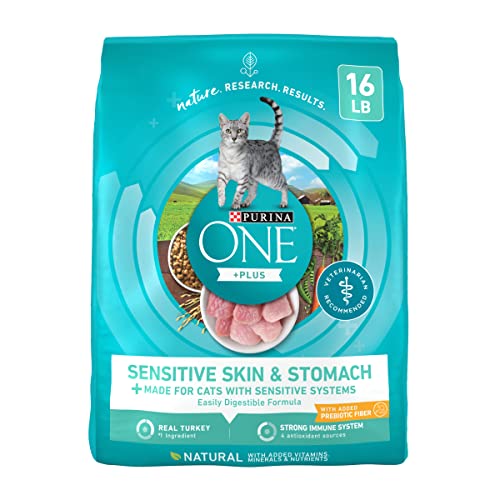
- High in protein with prebiotic fiber
- Affordable and commercially available
- First 5 ingredients: Turkey, chicken by-product meal, rice flour, corn gluten meal, soybean meal
- Guaranteed analysis: 34% Crude Protein, 14% Crude Fat, 4% Crude Fiber, 12% Moisture, 0.15% Taurine
- Life stage: Adult cats
Purina ONE Plus is a great cheaper cat food for a sensitive stomach and skin. It’s also the pick of reviewers who mention it helped with their cat’s bumpy, itchy skin, rashes, and even dry bald spots!
A dry food with real turkey as the first ingredient, this is an easily digestible option for cats that love kibble and are dealing with sensitive, itchy skin. Turkey tends not to be as allergic as chicken, beef, or fish.
The 34% protein by volume is on the higher end of sensitive stomach kibble scale. But as there are a mix of proteins, grains, by-products, this cannot be considered a limited ingredient recipe.
In 2021, Purina updated their formulation and name from Purina ONE to Purina ONE Plus. With the new formula, prebiotic fiber was added to help heal from the inside. This is a good thing for sensitive systems.
Some long time buyers complained, saying that the new formula caused issues to return. I feel like this just speaks to the variability of cat food brands and cats.
Purina ONE Plus Cat Food is full of antioxidants, taurine, and vitamins A, B, D, K, for health, vitality and immune-system support. The omega 6 fatty acids support skin, coat and organs.
While Purina does sneak in some things like by-products and grains, this budget-friendly, mainstream dry food has a good reputation of helping with sensitive skin issues, and is worth a try.
Rating Breakdown:
- Formulated for Sensitive Stomachs : 5/10
- Ingredient Quality: 6/10
- Flavor Variety: 1/10
- Price: 10/10
- Overall Score: 5.5
What We Liked:
- High in protein with prebiotic fiber
- Affordable and commercially available
What We Didn’t Like:
- Contains by-product meals, grains, and soy
Symptoms of Cats with Sensitive Stomachs

How do you know if your cat has a sensitive stomach? It can present in a number of different ways. Here are the telltale signs that your cat has a sensitive digestive tract and needs cat food for digestive problems.
Vomiting
The video above shows my poor Maine Coon, Chelle, feeling ill and gagging (nothing comes up in the video, no worries!) Her GI system is sensitive, and she’s showing early signs of kidney disease, of which a symptom is general ickiness and nausea, so this is a scene I’m too familiar with.
But in general, a one-time vomiting experience isn’t indicative of a sensitive stomach. This could be caused by anything from spoiled food to swallowing a non-food object.
However, noticing that your cat vomits frequently after meals can be a sign of an irritated stomach. If you’re wondering what to feed a cat that throws up everything, consider making a change from the usual diet to one better suited for sensitive stomachs.
Some cats actually vomit from eating too quickly, this is called regurgitation and what comes up is usually undigested food. Try giving your cat smaller portions before looking for the best cat foods for cats that throw up.
Diarrhea
While any change in stools can be a sign of a sensitive stomach, loose and runny stools are especially common and might require a gastrointestinal food for cats. Cats with sensitive stomachs may have diarrhea that is watery, foul-smelling, or bloody.
Diarrhea is caused by food intolerances, infections, or other gastrointestinal issues. If your cat has diarrhea, offer them water to important to avoid dehydration.
Constipation
If your cat is having trouble going to the bathroom, that could be another symptom of a sensitive stomach due to constipation.
Excessive hairballs
Hairballs actually aren’t “normal” for cats. Under normal conditions, your cat’s body would simply pass all of the fur that’s consumed during grooming. It’s possible that your cat is experiencing disrupted digestion if hairballs aren’t passing normally.
Cat food for hairballs is commercially available and a very common purchase amongst pet parents.
Allergic reactions
A tingly, itchy mouth can be a sign that a food does not agree with your cat. Is your cat pawing at her nose and lips suddenly? It’s a sign to look for if you suspect a sensitive stomach because an ingredient in cat food could be triggering issues.
Skin reactions
Red, raised skin can be a sign of an allergic reaction to a food that your cat cannot digest and process properly. Honestly, it’s hard to pinpoint food allergies even when we’re talking about humans. That’s why I recommend seeking professional help.
Lethargy
Some cats with sensitive stomachs may also withdraw and become more sluggish than usual. If your cat seems tired or listless, or not interested in playing or being around people, it may be because of a sensitive stomach.
See a Veterinarian!
No matter what the symptoms are, if you notice anything off about your cat with their skin, fur, or stomach issues, see a veterinarian and run some tests. Especially if the symptoms still reoccur even after attempts to mitigate them.
Sometimes, your vet may recommend a change in diet, X-rays, lab tests, or medication. However, it’s important to follow your vet’s recommendations to ensure that your cat gets the necessary care.
Then you can buy one of the commercially available cat foods for digestive problems above.
If the vet recommends a prescription-only gastrointestinal cat food, then consider:
Hill’s Prescription Diet z/d Skin/Food Sensitivities Dry Food


Hill’s Veterinarian Diet goals are to create foods that help specific health issues, all the while providing balanced nutrition.
Formulated by veterinarians and PhD’s, Hill’s Prescription Diet z/d Skin/Food Sensitivities is a super clean, grain and gluten-free, single carb, single protein source dry food formulated to avoid allergic reactions.
This prescription dry cat food for sensitive stomachs stands out vs commercially available options because it goes further:
- protein is hydrolyzed, or broken down molecularly to as to not cause a reaction from the immune system during digestion
- it’s single protein AND single carb (most sensitive stomach cat foods only go with a single protein)
Plus high levels of vitamin E and omega fatty acids are present for increased immune support, plus provides the gut nourishing benefits of fiber. One thing to consider is the cost of such food long-term.
Purina Pro Plan Veterinary Diets HA Hydrolyzed Formula Dry Food
Purina is a long time trust brand by the public and veterinary professionals alike. With their Pro Plan Veterinary Diets, Purina is putting out the best efforts of their nutritionists, researches, and vets.


This dry cat food for sensitive stomachs again has innovative hydrolyzed protein, meaning protein that has been chemically broken down and extremely easy to digest. There’s just 1 carb source and 1 protein source.
Compared to the Hill’s product above, Purina Pro Plan Veterinary Diets HA contains 1% more protein, 1.5% less fat, 0.5% less fiber, 1% more moisture, plus controlled amounts of ash, calcium, and phosphorus. (Hill’s does not track ash and other minerals, and may not be suitable for cats on a low ash diet.)
Because of the controlled ash and minerals, Purina Pro Plan Veterinary Diets HA supports urinary system health by discouraging buildup of crystals (struvite and calcium oxalate).
Again, the cost of prescription cat food long term is one thing to consider.
Type of Reaction
Acute
Acute reactions come on suddenly.
An acute reaction could also be a sign of an underlying issue emerging. It’s so important to talk to a vet to make sure that a cat’s digestive changes aren’t caused by kidney issues, liver issues, diabetes or more serious illness.
A cat’s sensitive stomach is also sometimes caused by acute gastroenteritis. This is essentially a sudden inflammation of the GI tract caused by spoiled food, parasites or some other trigger.
Chronic
Some common chronic digestive issues that impact cats include colitis and inflammatory bowel disease (IBD). Have your cat looked at by a vet to see if symptoms can be managed.
Food Allergies Can Be Acute or Chronic
Food with an offending allergen your cat ate can affect them immediately resulting in vomiting or diarrhea quickly after consumption.
But it can also be a chronic issue. Some food sensitivities can develop over time, imperceptibly. The one day, the reaction “suddenly” manifests in the form of symptoms like skin inflammation or itch.
This means that your cat may have been simply slugging through with food that irritates her for while.
If we know it is a food intolerance, we need to observe, keep a food journal, and ease our cat’s discomfort by switching to more appropriate food.
For cats who display severe allergies or persistent issues, look into hypoallergenic cat foods. These are prescription-only veterinarian recommended foods that the digestive tract is able to absorb without causing a reaction.
How to Choose a Sensitive Stomach Cat Food

Most mainstream sensitive stomach cat food formulas work by taking out triggering ingredients while adding soothing, gut-enriching ones. Others contain more fiber to help digestion, probiotics to balance the gut flora, and digestive aids to break down food.
We know from studies that beef, chicken and fish are most likely to cause allergies in cats and dogs. The path is really not all that different from when humans make gut-friendly diet changes!
Here’s are things to look for when choosing a sensitive stomach cat food.
High-Quality Protein Source
Gut-friendly formulas tend to use a single protein source instead of merging several to improve digestibility.
Limited Ingredients
In addition to helping to make digestion easy, formulas with just a handful of ingredients are helpful when you’re in the process of eliminating foods to see if your cat has specific dietary triggers.
These diets contain only a few ingredients, which can help identify any your cat is allergic to. They also contain new or unusual ingredients that your cat is unlikely to be sensitive to.
You will know your cat has a food intolerance if after feeding these foods, the issues stop.
Highly Digestible
These foods don’t hang around in your cat’s digestive tract causing trouble. Highly digestible foods and ingredients also enable your cat to absorb more nutrients.
Some owners have had good experiences helping their cat’s digestibility by regular supplementation of bone broth. It contains collagen and glycine which actually heals the stomach lining!
Prebiotics and Probiotics
These can come in the form of prebiotic fibers help to restore the balance of good and bad gut bacteria, and would be a great bonus in foods.
Many cat owners treat sensitive stomachs with life-changing results using diet and observation. Some vets recommend using “diet trials” where you try out a number of different cat foods to try to narrow down ingredients that cause issues.
Foods to Avoid for Sensitive Stomachs
While I’m focusing on the best cat food for sensitive stomachs, I also want to cover some foods to avoid if your cat is presenting symptoms of a sensitive tummy.
Keep in mind that every cat is different. That’s why I never make rules about choosing wet over dry food, grain over grain-free food or any other choices.
Here’s a look at the ingredients to “generally” avoid when buying cat food for sensitive stomachs:
- Dairy.
- Grains.
- Meals and by-products.
- Irritating by-products, dyes, preservatives and chemicals.
You also have to be realistic about what you can get your cat to eat. The most tolerable and gentle, sensitive stomach cat food does not do much if your cat won’t eat it.
Causes of a Sensitive Stomach in Cats
There are many potential causes of a sensitive stomach in cats. Some of the most common include:
Food Allergies
One potential cause of a sensitive stomach is an allergy to a particular ingredient in your cat’s food. The most common allergies are proteins, such as chicken, beef, or fish.
Food Intolerances
Another potential cause of a sensitive stomach is an intolerance to a particular ingredient in your cat’s food.
This is different from an allergy in that the cat may tolerate small amounts of the element, but large amounts can cause problems. The most common intolerances are actually with proteins like chicken, beef, or fish.
Viruses, Bacteria, and Intestinal Parasites
Parasites, viruses, and bacteria can also cause a sensitive stomach. These can be contracted from contaminated food or water or contact with other infected animals. Intestinal worms are a common parasite in cats and kittens.
Eating Too Quickly
Sometimes, cats eat so fast that they don’t chew their food correctly, leading to indigestion and vomiting. A cat’s stomach is tiny, and sometimes cats get greedy with their gulps.
Illness
Finally, illness or injury of any sort can also cause a sensitive stomach. If your cat has been ill or injured, it may be more susceptible to stomach problems.
Vomiting and diarrhea are symptoms of many serious diseases, like kidney disease, pancreatitis, liver disease, or cancer so visit the vet if you’re unsure.
Medication
Medications can also cause a sensitive stomach as a side effect. If your cat is taking any medication and suffering from symptoms of a sensitive stomach, talk to your vet about the possibility of this being a side effect.
Stress
Some cats may develop a sensitive stomach due to stress. If your cat is stressed, it may be more likely to develop stomach problems. Was there any sudden change in the environment?
How about new people or another pet? Cats love stability and are habitual, so deviation from this may cause stress,
Hairballs
Finally, hairballs can also cause a sensitive stomach. As a cat owner you already know that when a cat stops eating and withdraws for a bit, it’s almost time for a hairball!
Food Digestibility Scores
Here are digestibility scores of common ingredients and foods in cat food.
Cooked Egg Whites
Cooked egg whites are a highly digestible protein often used in cat food. Egg whites are a good source of essential amino acids and are easy for cats to digest; hence their digestibility score is 100%.
Animal Muscle Meat
Muscle meat is another digestible protein that is often used in cat food. Muscle meat is a good source of essential amino acids and is easy for cats to digest. Its digestibility score is about 95%.
Organ Meats
Organ meats are a good source of protein and easy for cats to digest. However, they can be high in fat, so they should be fed in moderation. Their digestibility score is about 95%.
Fish Meal
Fish meal is a good source of protein, and it is easy for cats to digest. However, it can be high in mercury, so it should be fed in moderation. Their digestibility score is about 90%.
Soy
Soybean meal is a good source of protein, but it is less digestible than other proteins. Soybean meal has a digestibility score of about 80%. This is because it contains antinutritional factors that can interfere with digestion.
Corn
Corn is a good source of protein, but it is less digestible than other proteins. Corn has a digestibility score of about 70%. This is because it is a complex carbohydrate that is difficult for cats to break down.
What Do Vets Recommend for Cats with Sensitive Stomachs?
Stop Feeding
If your cat is vomiting, has diarrhea, or is otherwise not feeling well, the first thing you should do is stop feeding them. This may seem counterintuitive, but it gives your cat’s stomach a chance to rest and recover. You can offer small amounts of water to keep them hydrated, but food will only worsen things.
Provide a Bland Diet
Consider switching your cat to a bland diet until their stomach feels better. This means boiled chicken or turkey with no skin or fat and plain white rice. Avoid anything spicy, acidic, or otherwise hard on the stomach. If your cat is still not feeling well after a day or two on a bland diet, it’s time to take them to the vet.
Elimination Diet or Diet Trials
Sometimes the culprit of a sensitive stomach is an allergy or intolerance to a certain food. In this case, your vet may recommend an elimination diet. This involves removing all potential allergens from your cat’s diet and slowly reintroducing them one at a time. This can be a long and difficult process, but it’s the best way to figure out what is causing your cat’s stomach issues.
Hydration!
Finally, it’s important to make sure that your cat stays hydrated. Dehydration can worsen stomach issues, so offer small amounts of water throughout the day. You may also want to consider switching to a wet diet, as this will help increase your cat’s fluid intake.
Frequently Asked Questions on the Best Cat Food for Sensitive Stomachs
What food is best for cats with sensitive stomachs?
This can vary based on the cause of the sensitivity. However, you’re often looking for clean formulas with as few ingredients as possible. Here are a few of the best options:
- Hypoallergenic Cat Food: Hypoallergenic cat food is the best option if your cat has food allergies or intolerances. This type of food is made with limited ingredients and no potential allergens. Also, read the label carefully to ensure that the food does not contain any of the allergens that your cat is sensitive to.
- Limited Ingredient Cat Food: Cat food with limited ingredients is also a good option for cats with sensitive stomachs. This food contains only a few key ingredients, making it easier to digest. Besides, avoiding foods with fillers, artificial flavors, and preservatives is also a good idea.
- Hydrolyzed Protein Cat Food: Hydrolyzed protein cat food is a great option for cats with sensitive stomachs. This type of food is easily digestible and helps reduce inflammation in the gut. Additionally, it’s also a good idea to look for cat food that is high in fiber to help with digestion.
What is the easiest food for cats to digest?
The easiest food for cats to digest is high-quality animal protein. Muscle meat, organ meats, and fish meal are all excellent digestible protein sources.
Beyond that, novel proteins like turkey, lamb and duck are much easier to digest than things like beef and turkey. We know from studies that beef, chicken and fish are more likely to cause food allergies in cats and dogs. They can also be a little tougher to digest.
Soy and corn are less digestible, but they can still be a part of a healthy diet for cats. When choosing a food for your cat, look for one with high-quality animal protein as the first ingredient.
What is the easiest protein for cats to digest?
Single Protein Food – If your cat has digestive issues, a single protein diet may be helpful. This diet contains only one type of protein, which can help identify any your cat is allergic to. Single protein diets are also often highly digestible. Talk to your vet about whether a single protein diet suits your cat.
High-Quality Animal Protein in Cat Food – The type of protein in your cat’s food is also essential. High-quality animal proteins are easier for cats to digest than plant proteins. Look for foods that contain meat, poultry, or fish as the first ingredient. Avoid foods that contain meals, by-products, or fillers.
Can cats have a food intolerance?
Yes, cats can have a food intolerance, which results from their digestive system not being able to properly break down certain ingredients in their food.
Food intolerance is different from food allergy. A food allergy is an immune reaction to a particular ingredient in the food, while food intolerance is an adverse food reaction that causes digestive issues.
Certain risk factors for food intolerance and allergies include age and breed. Some breeds, including Siamese cats, are more likely to develop food intolerances and allergies.
What are cats allergic to?
There is no one specific ingredient that all cats with food intolerance are allergic to. Common allergens include proteins like beef, chicken, and fish or grains like corn and wheat.
Cats are also allergic to certain medications. If your cat is reacting to a particular ingredient in his food, he may tolerate other ingredients just fine, which is why it’s so important to work with your vet to determine the cause of your cat’s symptoms.
How do I know what food my cat is allergic to?
Diet trials are the best way to know what food your cat is allergic to. Diet trials are conducted by feeding your cat a limited ingredient diet containing no common allergens.
This diet must be fed for several weeks to see results, so it requires patience. If your cat’s symptoms improve on the limited ingredient diet, they likely have a food intolerance. Your vet can help you select an appropriate diet for your cat and guide you through the trial process.
Although diet trials can be time-consuming, they are the best way to determine if your cat has a food intolerance. If you think your cat may have a food intolerance, talk to your vet about starting a diet trial.
What are symptoms of chicken allergy in cats?
The symptoms of a chicken allergy in cats are the same as those of any other food intolerance. Common symptoms include vomiting, diarrhea, flatulence, weight loss, lethargy, itching, respiratory issues, and inflamed skin.
What are some homemade cat foods for cats with allergies?
There are several homemade food options for cats with allergies. Some include:
- Rice and boiled chicken
- Oatmeal and boiled chicken
- Potato and boiled chicken
- Sweet potato and ground turkey
Before starting your cat on a homemade diet, it is important to speak with your vet.
They can help you select a recipe that meets your cat’s nutritional needs and ensure that it does not contain any of the allergens your cat is intolerant to.
